

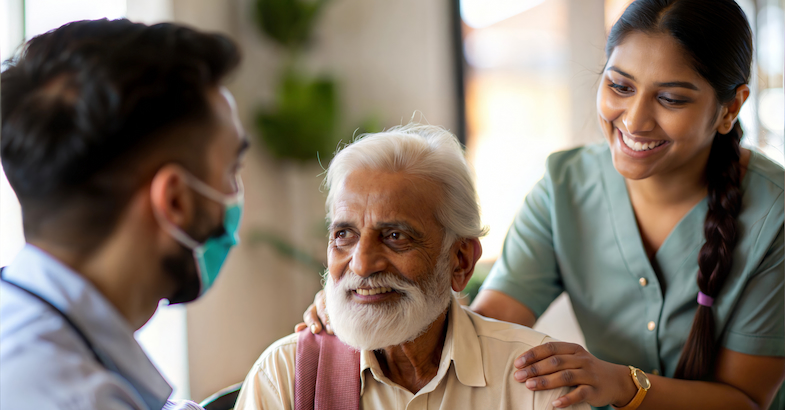
In the next decade, nearly one in seven Indians will be aged 60 years or above. Chronic diseases are rising, and more people are living longer with long-term conditions. These shifts demand care that is continuous, coordinated, and often delivered beyond hospital walls. A critical question sits at the heart of India’s healthcare future: how must the system evolve?
These trends are already unfolding in households across the country. Families are increasingly navigating the realities of caring for ageing parents with chronic conditions. However, healthcare remains largely episodic, hospital-centric, and expensive, leaving significant gaps in continuity of care, rehabilitation, and long-term support.
Recent Union Budget allocations have taken total health spending beyond ₹1 lakh crore (Union Budget 2026-27) and propose training nearly 1.5 lakh geriatric caregivers to strengthen the health workforce. Ayushman Bharat PM-JAY was recently expanded to provide health insurance coverage of up to ₹5 lakh annually for all senior citizens aged 70 and above. The long-term impact of these measures will depend on how effectively delivery systems adapt to growing care needs.
Evolving Care Needs and Priorities
Meeting these needs will require integrated senior care ecosystems that combine assisted living, rehabilitation, home healthcare, and wellness services. Such approaches enable seniors to ‘age in place’ with dignity, safety, and continuity of care, rather than navigating fragmented services or repeated hospital visits.
Family expectations are also changing as caregivers and families are no longer focused solely on clinical treatment. Instead, they increasingly prioritise quality of life, independence, emotional wellbeing, and preventive care for their elderly loved ones. This means the care delivery systems will have to be age-responsive and shift beyond facility-based models.
Empowering Caregivers and Communities
Family caregivers are often the most constant presence in a patient’s recovery journey. Yet across India, they remain largely invisible within formal health system design.
Some of the most impactful health interventions are not high-end technologies, but knowledge and confidence placed in the hands of motivated caregivers. Through hospital-based training reinforced with digital tools, caregivers can learn to identify warning signs, manage post-surgical care, and support maternal and newborn health. Recognising caregivers as partners in care could significantly reduce avoidable hospitalisations, complications, and readmissions while easing long-term system costs.
Caregivers are not isolated actors. They are part of a broader community-based care ecosystem, supported by local health workers and stronger primary care systems. Together, they anchor care within homes. Digital health tools and remote monitoring technologies can further strengthen this ecosystem by enabling early detection, regular follow-up, and timely intervention without requiring hospital visits.
This partnership becomes especially evident in palliative care, which extends far beyond the end-of-life approach. At its core, it is about relieving suffering, preserving dignity, and improving quality of life throughout the course of illness. Community-based palliative care can extend relief to patients living with chronic illness, disability, or severe pain, many of whom live far from hospitals and with limited resources, showing how compassionate care can reach even the most vulnerable populations.
The Economics of Home-Based Care
Rehabilitation, chronic disease management, and even certain high-acuity services delivered at home can significantly reduce costs compared to hospital-based care, while improving patient comfort and recovery outcomes.
However, financing and insurance models remain largely hospital centric. Coverage for prevention, rehabilitation, and long-term care is still limited. While innovative models, such as bundled care, insurer partnerships, and subscription-based chronic care programs, are emerging, their scale-up will depend on policy support and robust outcome data. As public spending increases, the way funds are structured will shape future health outcomes. Supporting preventive approaches and home-based care will be key.
The Road Ahead: A Call to Reimagine Care
India stands at a pivotal moment to reimagine healthcare, not through incremental reform, but through intentional redesign. Rising chronic diseases, an ageing population, and escalating healthcare costs demand a system that delivers continuous, coordinated, and human-centered care, increasingly outside hospital walls.
To achieve this, operational realities and financial models must evolve. Home-based care, rehabilitation, and chronic disease management can reduce costs and improve outcomes. Scaling innovative models, such as bundled care, insurer partnerships, and subscription-based programs, requires policy support and outcome-driven evidence.
Technology must be a central enabler, not just a supporting tool. Remote monitoring, telehealth, and digital reinforcement of caregiver training allow early detection, timely intervention, and continuous follow-up, ensuring care extends seamlessly into homes and communities.
India’s healthcare system must shift from episodic, hospital-centric treatment to continuous, person-centred health management. Insurance, primary care, workforce training, and technology must align to support prevention, chronic care, and home-based interventions, creating a system that is efficient, equitable, and profoundly human. Community health workers are the anchors of this ecosystem.
This is not merely a reform; it is a fundamental reorientation of care, one that places dignity, continuity, and social responsibility at the core of health. By acting decisively, India can build a healthcare model that is scalable, sustainable, and globally instructive, where homes, communities, and everyday relationships become the foundation of health.
*This blog draws on insights from the panel discussion on “Reimagining Care Delivery Beyond the Hospital in India,” held during ISB’s Healthcare 4.0 Summit in February 2026.
Authors’ Bios:
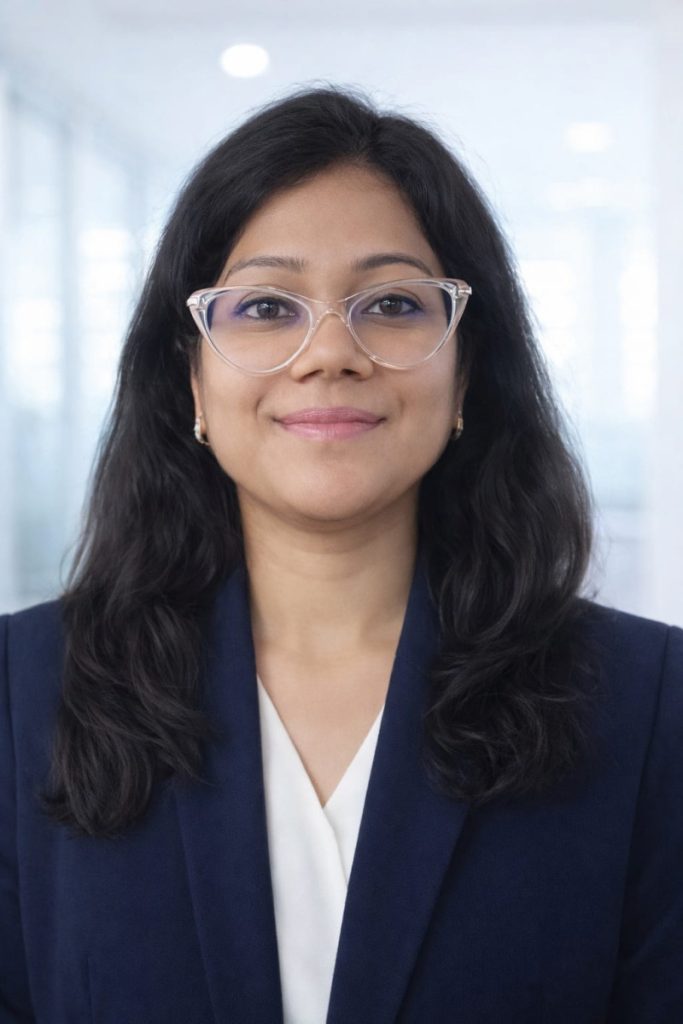
Dr. Rricha S. Maheshwari
Healthcare Professional
Dr. Rricha S. Maheshwari is a healthcare professional with 10+ years of experience across clinical practice, hospital leadership, and academia, primarily working in Tier 2 and Tier 3 cities with deep exposure to rural and semi-urban healthcare settings. She is the Owner and Director of Shamli Eye and Dental Hospital and an Assistant Professor at Ajay Sangal Institute of Medical Sciences, where she combines practical leadership with academic mentorship. Driven by a strong passion for transforming healthcare delivery, she focuses on building scalable, data-driven, and patient-centric models through a holistic, bottom-up approach, while actively working to bridge primary, secondary, and tertiary care systems and collaborating closely with emerging and potential corporate healthcare setups in Tier 2 and Tier 3 regions to improve continuity, accessibility, and quality of care for all.
LinkedIn Profile: www.linkedin.com/in/dr-richa-maheshwari-044b81157
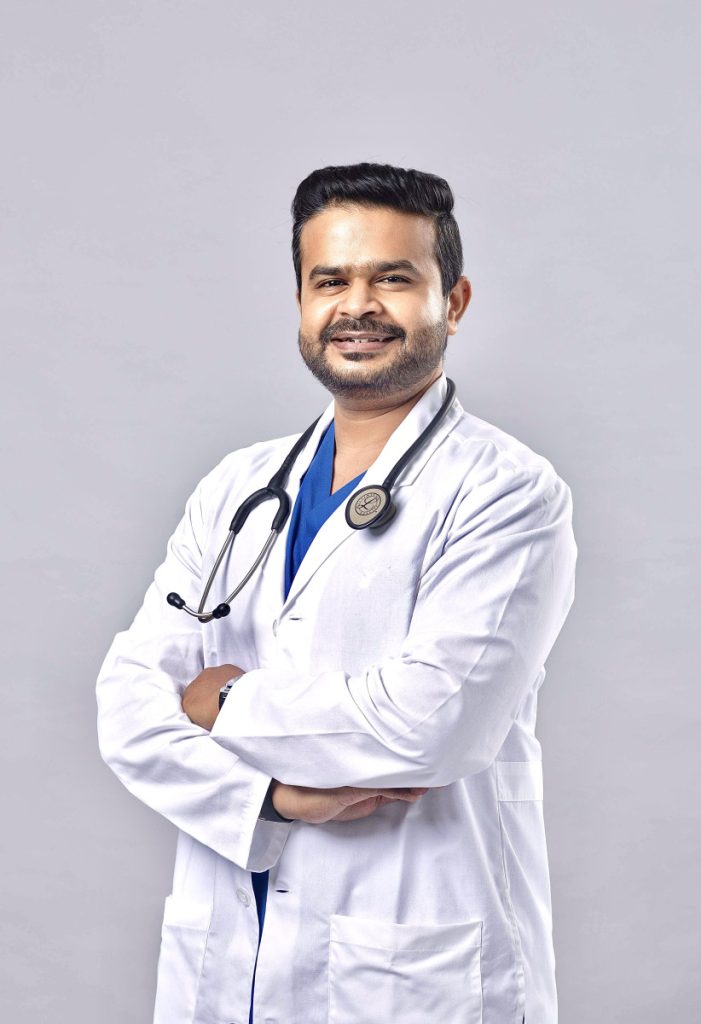
Dr. Chanakya Saini
General Physician
Dr. Chanakya Saini is a general physician with over a decade of experience in outpatient care, managing diverse patient populations and high daily volumes. Beyond clinical practice, he has contributed to the development of clinical protocols and process improvements aimed at enhancing efficiency and consistency in care delivery. His on-ground experience has shaped a strong interest in addressing systemic gaps in healthcare, particularly around access, operational efficiency, and continuity of care. He is especially interested in how AI and digital health solutions can augment clinical decision-making and streamline healthcare delivery at scale. As a participant in the Advanced Management Programme in Healthcare, he is developing capabilities in healthcare strategy, operations, and innovation, with a focus on building technology-enabled, patient-centric healthcare models.
LinkedIn Profile: https://www.linkedin.com/in/chanakya-saini-274805141/
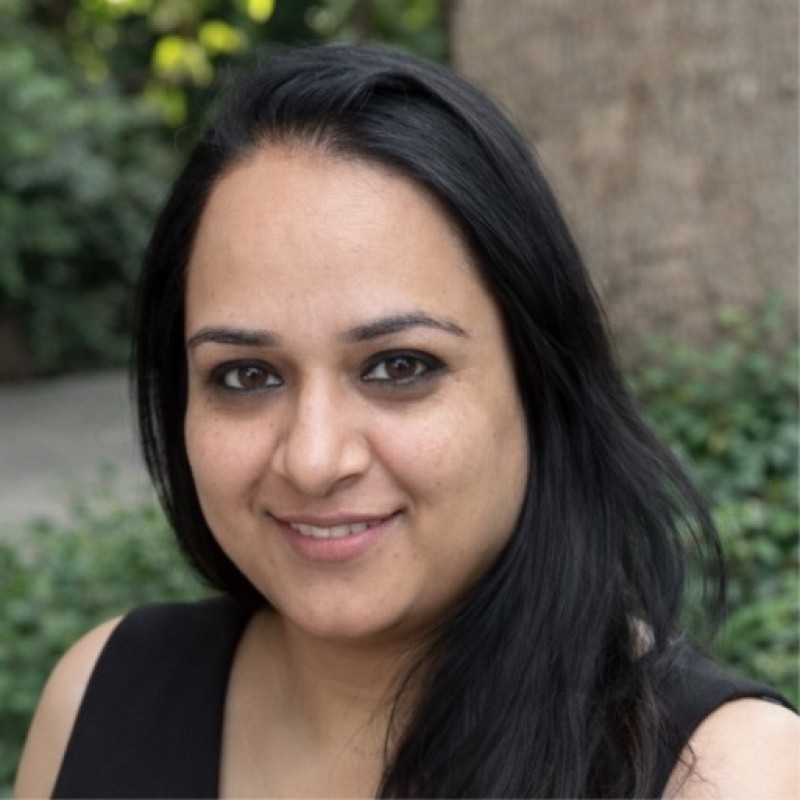
Navsangeet Saini
Writer
Navsangeet Saini is a communication professional with over 13 years of experience across academia, media and communication research, and writing. She holds a Ph.D. in Mass Communication and is interested in how storytelling shapes communities and societies. At the Max Institute of Healthcare Management, Indian School of Business (MIHM‑ISB), she brings this perspective to healthcare communication, translating research into accessible and engaging narratives for wider audiences.