
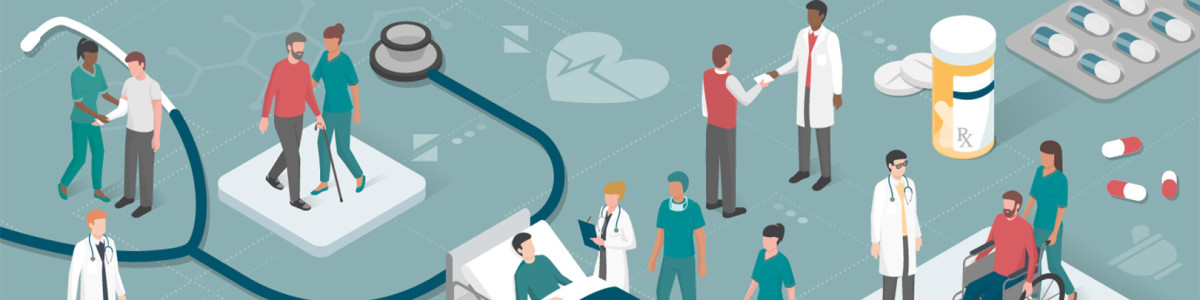

As India makes progress in digital health through initiatives like ABDM and increased private-sector AI adoption, artificial intelligence is moving from experimental pilots to real-world healthcare infrastructure. The national digital health ecosystem now boasts hundreds of millions of ABHA health IDs and linked records,1 forming the backbone for interoperable data that can power AI tools across care settings, an essential foundation for scaling AI solutions beyond isolated pilots. At the same time, reports indicate that over 40% of clinicians in India could be using AI in practice, a three-fold rise from the previous year,2 reflecting growing uptake among healthcare professionals. A paradigm shift is underway.
Proliferation of AI- based Health Solutions and Adoption Challenges
AI is being increasingly used in healthcare, transforming how patients are diagnosed, treated, and monitored across research, clinical decision-making, and hospital operations. While the healthcare market today is flooded with AI-based solutions, a key concern is that availability does not equal readiness for adoption. Hospitals must critically assess:
- Scalability of the AI solution.
- Compatibility with existing clinical workflows and IT systems.
- Whether the solution can function effectively in real-world, high-volume hospital settings rather than controlled pilot environments.
For hospitals to be AI-forward, they must build a modern, cloud-based infrastructure. Digitalization, and not mere digitization, is essential to ensure interoperability for effective AI integration. Data management is a key area that must be addressed to leverage the true potential of AI for better administration and foresight.
In this context, the role of structured adoption and evaluation frameworks becomes critical. Indian School of Business’ Max Institute of Healthcare Management is collaborating with Government of Telangana as Design and Evaluation Partner for AI in Healthcare to strengthen evidence-based adoption of AI and digital health solutions in the state. Through this partnership ISB–MIHM intends to support the state in systematically assessing AI proposals from various stakeholders to determine their implementation feasibility within the existing public healthcare ecosystem. The team will also assist in the evaluation of on-ground pilots, examining clinical relevance, workflow integration, and operational impact. Based on pilot learnings, ISB–MIHM will eventually help the government develop evidence-based scalability roadmaps for sustainable state-wide adoption. Such partnerships focused on AI adoption evaluation can help hospitals move from fragmented pilots to evidence-backed deployment decisions, reducing the risk of AI underutilization and misaligned investments.
Key Use cases
AI in Medical Imaging
AI adoption in medical imaging is one of the more mature and tangible use cases. Solutions such as Qure.ai are well regarded for their role in assisting radiologists with faster detection and prioritisation of critical findings (for instance, in TB, stroke, lung abnormalities). Imaging is seen as a relatively structured domain where AI integration has shown clearer clinical and operational value.
Fragmented Data Ecosystems
A major systemic barrier is the lack of robust, interoperable Electronic Medical Records (EMRs) across the Indian healthcare ecosystem.
- Patient data often exists in silos – labs, radiology, pharmacy, OPD/IPD systems- with limited integration.
- This fragmentation significantly limits the effectiveness of AI, which depends on longitudinal, high-quality data.
The robust EMR implementation at some hospitals, such as Narayana Health, can serve as a positive example of efficient and interoperable digital integration within a large private hospital network.
Ambient AI and Clinical Documentation
The use of AI for ambient clinical scribing (automatic documentation during doctor-patient interactions) is an emerging application. However, it has its limitations, including:
- It performs poorly in inpatient (IPD) settings, where conversations are complex and involve multiple participants.
- India’s linguistic diversity and dialect variations significantly reduce accuracy
This highlights the gap between promising demos and real-world clinical environments.
Why are Standardisation and Regulation necessary?
As AI grows more important in healthcare, it is imperative to establish strong ethical and regulatory frameworks to ensure data security and privacy, transparency, and accountability. Regulations are important to address concerns regarding patient safety, data security and privacy, reducing algorithmic bias, building accountability and transparency, ensuring its seamless integration.
In India, the laws are yet to fully account for the nuances of AI applications within healthcare. In the absence of a dedicated AI-in-healthcare law, current guidance remains largely advisory, leading to uneven adoption and governance. As a result, many private hospitals develop or procure AI systems, resulting in wide variation in quality, standards, and interoperability. To build confidence among healthcare providers, patients, and public, AI solutions must be ethical, sustainable, accurate and safe.
The Way Forward: ABDM as a Potential Enabler
Ayushman Bharat Digital Mission (ABDM), the flagship initiative of the Government of India, is aimed at creating a unified digital health infrastructure by connecting key stakeholders, including doctors, patients, hospitals, and digitized records into an interoperable healthcare ecosystem. A critical national initiative that could address several digital integration challenges at national scale, ABDM is built on four core pillars:
– ABHA (Ayushman Bharat Health Account) – unique digital health ID for citizens to securely manage and store their health data.
– Health Facility Registry (HFR)- a comprehensive database for all registered health facilities (public/private) across the nation, including hospitals, clinics, pharmacies.
– Health Professional Registry (HPR)- a centralised database for all healthcare providers to register and obtain a unique health ID for seamless integration into national healthcare fold.
– Health Information Exchange & Consent Manager (HIE-CM) – a virtual bridge for sharing health records among authorized entities, with patient consent, enabling interoperable, consent-based data sharing.
While ABDM strongly emphasizes integration and interoperability, private hospitals remain hesitant about adoption, due to concerns around data sharing, operational burden, and unclear incentives, offering a structured foundation for scaling and wider adoption of AI-enabled healthcare solutions. However, its successful implementation hinges on overcoming the challenges associated with its adoption. Targeted awareness campaigns, clear incentives, and stronger privacy safeguards can improve participation, particularly among private providers.
*This blog draws insights from the discussion on ‘Real-world impact of AI in healthcare’ during ISB’s Healthcare Catalyst 2026 led by Prof. Sumeet Kumar, Faculty, Information Systems at ISB & co-led by Dr. Partha Ghosh, AVP-Virtual Care, Medanta.
References:
1. Government of India, Ministry of Health & Family Welfare. (December 2023). India is choosing digital health services. Press Information Bureau.https://abdm.gov.in/strapicms/uploads/Press_Information_Bureau_website_11_1e66eae20a.pdf
2. PTI. (2025, September 30). Global report says 40% of clinicians in India could be using AI in work. The Economic Times. https://economictimes.indiatimes.com/industry/healthcare/biotech/healthcare/global-report-says-40-of-clinicians-in-india-could-be-using-ai-in-work/articleshow/124229379.cms?from=mdr

Authors’ Bios’:
Tanushree Whorra
Research Analyst
Tanushree Whorra works at the Max Institute of Healthcare Management, Indian School of Business (MIHM–ISB), where she contributes to the evaluation of AI and digital health initiatives in public health systems. She is interested in bridging research, policy, and practice to drive meaningful health system impact.
Navsangeet Saini
Writer
Navsangeet Saini is a communication professional with over 13 years of experience across academia, media and communication research, and writing. At the Max Institute of Healthcare Management, Indian School of Business (MIHM-ISB), she crafts narratives that make complex research accessible and relevant to diverse audiences.