
A patient has been declared fit for discharge by the doctor during morning rounds, but the patient waits hours for the discharge summary, pharmacy clearance, bills and insurance approvals. Multiply this delay across wards, across days and the costs become visible. Beds remain occupied, admissions get delayed, the pressure on staff mounts and patient satisfaction decreases. In India, where there are fewer than 0.6 beds per 1,000 people,1 the impact of such operational bottlenecks is magnified. The delays are largely operational, not clinical. This is where AI is making a significant impact in healthcare.
In hospitals, clinical and non-clinical workflows together shape the patient experience. Non-clinical operations, such as discharge planning, bed management, billing, insurance and pharmacy flows, along with other documentation and coordination processes, determine how efficiently care is delivered. These areas offer immediate opportunities for improvement. AI integration in healthcare is accelerating to address operational inefficiencies that erode capacity, revenue, and patient trust. However, integration alone does not guarantee impact. The real value of AI lies in how effectively it empowers the people and processes at the heart of care delivery. Its success ultimately depends on whether clinicians and staff adopt it, adapt it to their workflows, and trust it as a partner in delivering better care.
AI, especially Artificial Narrow Intelligence (ANI), is being increasingly embedded in non-clinical processes to improve speed, consistency and coordination across workflows, enhancing the overall impact of clinical decisions. This enables the clinicians and staff to do their work efficiently with fewer interruptions or delays.
Key Use cases
- Managing Patient Flow and Minimising Discharge Delays
Once a doctor orders discharge, a chain of non-clinical processes is triggered: preparation of the discharge summary, medication reconciliation, pharmacy verification, billing and insurance clearance, and coordination with bed management. When handled sequentially after the discharge order, these steps significantly extend turnaround time. The result is lost bed days, longer waiting times, and mounting pressure on emergency and elective services.
At AIG Hospitals, an ambient AI tool called PRISM (Prescription Recorder and Intelligence Summary Maker) captures doctor-patient conversations in 14 vernacular languages. This tool automates synthesis of clinical information, reducing the time required for preparation of discharge summaries from several hours to a few minutes. Additionally, AIG utilizes AI for real-time bed management, allowing staff to track room readiness across ten floors to ensure seamless patient flow. - Screening and Triaging at the Last Mile
Organizations like Wadhwani Global AI and Qure.ai focus on high-volume, resource-constrained settings with solutions designed to function at the last mile. Key innovations include a tool that assists in screening for Tuberculosis (TB) using only smartphone-recorded cough sounds while another clinical decision-support tool evaluates chest X-rays for TB in under a minute. These innovations can bridge community-level care gaps by enhancing screening, triage, and referral efficiency in underserved settings.
The Road Ahead
AI-powered solutions show promise, but their effectiveness depends on the strength of the underlying data infrastructure. Without high-quality data, digital and AI tools cannot meaningfully improve hospital processes or effectively support human decision-making.
This remains a structural challenge. Industry analyses suggest that only around one-third of Indian hospitals have adopted electronic health record (EHR) or electronic medical record (EMR) systems, a rate far below that in many high-income countries. Many of these systems are largely administrative.2 As a result, the data required for workflow alignment, coordination, and performance measurement is often incomplete or fragmented. Unless data practices are strengthened, it will be difficult to build systems where people can work safely and efficiently.
Moreover, for AI to truly transform healthcare, engineers, clinicians and other key stakeholders must collaborate to ensure every tool is clinically validated and operationally sound. In this direction, ISB’s Max Institute of Healthcare Management is also working with the Government of Telangana to develop evaluation frameworks that support sustainable AI adoption.
Human oversight remains central at every stage, from development to deployment. AI systems work better when they’re built around the existing processes and workflows, functioning in tandem to strengthen them. Ultimately, AI’s success will not be measured by novelty, but by whether it reduces delays, frees up beds, and supports the clinicians and staff who keep hospitals running.
*This blog draws on insights from the discussions on “Operationalising AI: Aligning Workflows and Measuring Impact in Hospital Settings,” held during ISB’s Healthcare 4.0 Summit in February 2026 and the ISB Healthcare Catalyst in November 2025.
Authors’ Bios:
Dr. Sreekanth Racherla
Founder & Managing Director of Shanvika Hospitals, Hyderabad
Dr. Sreekanth Racherla is the Founder & Managing Director of Shanvika Hospitals, Hyderabad, focused on building ethical, patient-centric healthcare systems. A physician and healthcare entrepreneur, he combines clinical insight with strategic hospital management to create scalable and efficient care models. Currently part of the Advanced Management Program in Healthcare at the Indian School of Business, he is passionate about healthcare transformation, innovation, and operational excellence in healthcare delivery.
Dr. Mayur Mandrah
Emergency Physician
Dr Mayur Mandrah is an emergency physician with over nine years of experience spanning clinical medicine, military service, and healthcare operations. An ex-Army Major, he brings frontline experience from high-risk environments to his work in healthcare systems. As part of the Advanced Management Programme in Healthcare at the Indian School of Business, he explores health systems and healthcare consulting, focusing on how AI, data, and health-tech innovation are shaping the future of healthcare.
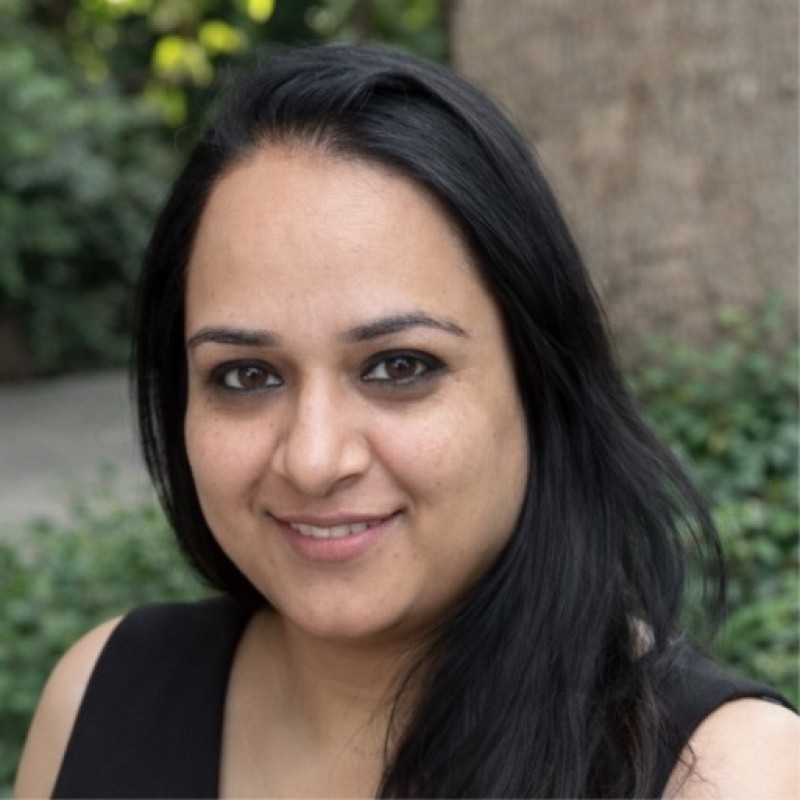
Navsangeet Saini
Writer
Navsangeet Saini is a communication professional with over 13 years of experience across academia, media and communication research, and writing. She holds a Ph.D. in Mass Communication and is interested in how storytelling shapes communities and societies. At the Max Institute of Healthcare Management, Indian School of Business (MIHM‑ISB), she brings this perspective to healthcare communication, translating research into accessible and engaging narratives for wider audiences.