

When I walked into her small, dimly lit room, Anju was preparing the meal while semi-reclined. Propped up against the wall on a narrow cot, she rolled the dough and strained to reach for the stove placed beside her on a low table. Her son moved around the room, helping her: washing the vegetables, fetching a pan for tadka, stepping in wherever he could. Had she told me how she managed the chores only in words, I may not have fully grasped how much effort everyday survival demanded of her. She was physically depleted from her ongoing treatment for tuberculosis, in addition to an advanced pregnancy. It was difficult for her to sit or stand for any length of time.
I was there, along with the assessment officer, to conduct her baseline evaluation as part of a research project I am a part of. We had barely exchanged greetings when Anju gestured to her son, and he immediately brought a waste bin closer. She felt nauseated by the smell of the tadka, due to her pregnancy as well as the side effects of her TB medications. “She shouldn’t be cooking. She can’t take the smell,” he said. “But I don’t know how to cook.”
Once the retching subsided, Anju finished what she was doing and then turned to speak to me. During our conversation, I learned that she was managing largely on her own. Her main support came from her two children from her first marriage, a twelve-year-old son and a ten-year-old daughter. She had remarried against her family’s wishes, following which her family had cut off contact with her. Her second marriage was also starting to unravel, mainly due to her second husband’s inability to accept her kids. This left her without spousal support during a challenging period. Barely sixty kilograms in the eighth month of her pregnancy, Anju was weighed down by multiple breaks across marital, familial, and institutional support systems. Unable to work, she had no active source of income and was surviving on her meagre savings and sheer resolve. It was clear how deeply this had impacted her emotionally too, as she broke down several times while narrating her ordeal to me. Put together, these conditions made it difficult for her to cope or adhere to treatment.
As field researchers, we work within clearly defined guidelines. However, her vulnerabilities exceeded what the protocols were designed to anticipate. In that moment, ethical judgement and procedural boundaries had to sit together.
After consulting other field staff, I decided to contact her family, at the very least to ensure that her meals were taken care of. Her mother and bhabhi, who lived close by, arrived a little while later. Little persuasion was needed because seeing Anju’s condition was explanation enough. They agreed to support her through the remainder of her pregnancy, beginning with food.
Anju remained in touch with us throughout her maternal journey. She often reached out when conflicting advice about TB treatment during her final months of pregnancy unsettled her. We consistently followed up, counselling and guiding her to appropriate medical counsel. Digital adherence tools acted as one of her stabilising supports, helping her continue her treatment when most other forms of support were intermittent.
In my documentation, Anju appears as a patient nearing her treatment completion, her newborn recorded as having received TB prophylaxis. What those records cannot capture is how over time, care came together for Anju and her kids in small, fragmented ways, even in the absence of a formal reconciliation with the family. Her mother supported her through childbirth and the postpartum period, while her bhabhi took over the care of her older children.
This case made me realise that care works differently across contexts. Here, formal care, informal social support and technology intersected to piece together a layer of protection, just long enough for life to get back on track.
*The views expressed in this article are solely the personal opinions and reflections of the author(s) and do not necessarily reflect the objectives of the study they are part of.
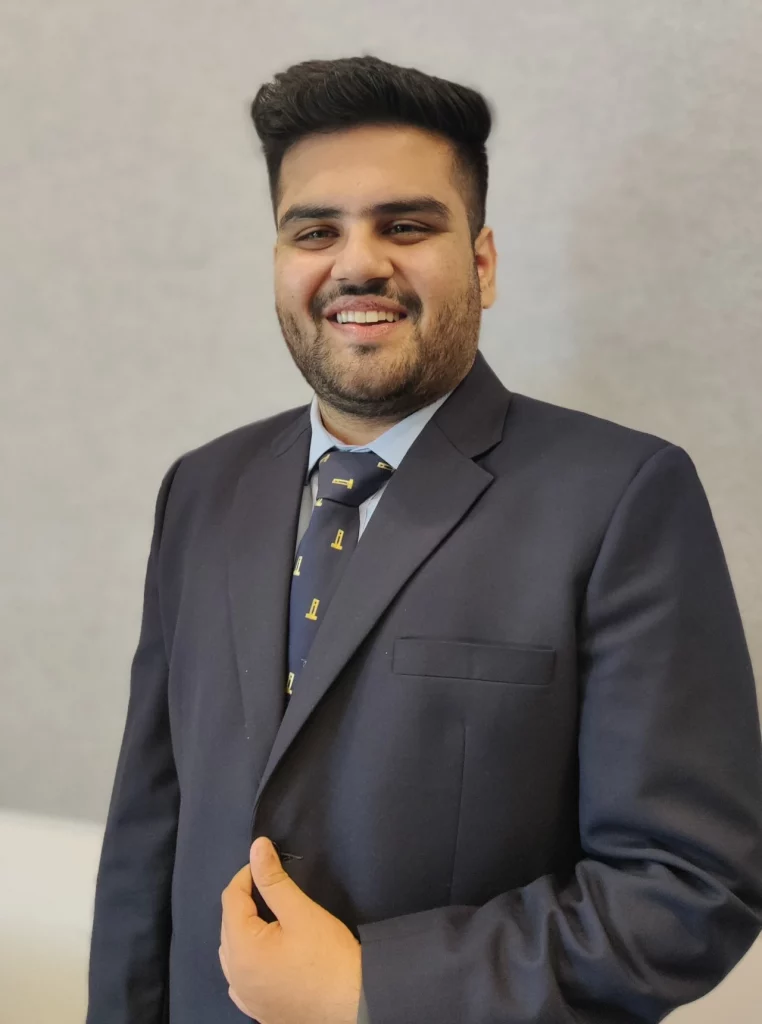
Author’s Bio:
Dr. Avish Sethi
Research Associate
Dr. Avish Sethi is a public health professional with a clinical foundation in dentistry and hands-on experience in implementation research, randomized controlled trials, and monitoring & evaluation (M&E).
He has contributed to government and donor-funded health programs, supporting the development of M&E frameworks, research tools, and mixedmethods analysis, while also managing budgets and engaging diverse stakeholders.
Currently as a Research Associate at Max Institute of Healthcare Management at ISB, Avish supports the implementation of a randomized controlled trial focused on TB treatment adherence. His responsibilities span team management, ensuring high-quality field execution, safeguarding data integrity, and providing analytical support throughout the research lifecycle.