

Introduction
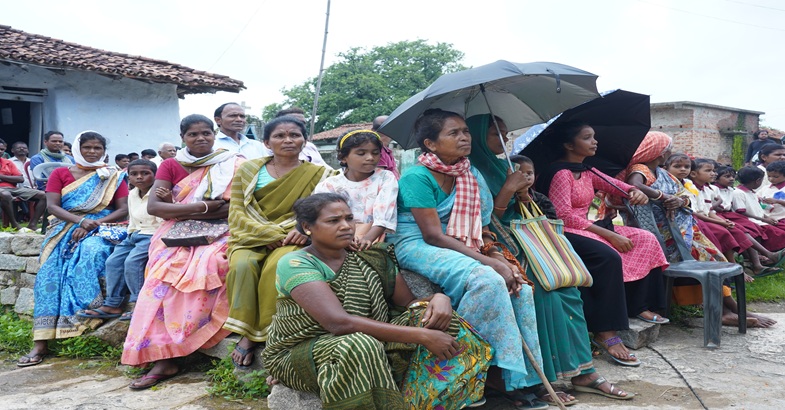
The UN has designated 2026 as the International Year of the Woman Farmer. This focus is to spotlight the role women play in global agriculture. If for a moment we flip and ask what role agriculture plays in the life of a woman farmer? It is all about seeking what agriculture can bring forth for the many women to progress and contribute towards the goal of ‘Viksit Bharat 2047’.
Women are the backbone of Indian agriculture, with more than 75% employed women in India working in agri. About 70% of farm work is led by women and 50% of rural women are agri labourers. These numbers may catch our attention, and say agriculture is feminised in India, but is it true?
Despite their significant contribution, only a fraction of women has access to resources and support they need to thrive. Only 2-5% of women have the resources they need to succeed on farms when compared to men.
Mere Presence Isn’t Conscious Integration
From sowing, handling cattle, harvesting, running self-help groups to farmer producer organisations, women are present across the whole value chain, yet not integrated ‘intentionally or consciously’ in the agriculture sector.
This gap or invisibility between presence vs integration leads to huge loss of productivity, negative impact on economic growth and most importantly on the sustainability of farming future. As per Food & Agriculture Organisation, this under representation carries disproportionate burdens, and closing this gender gap could raise global GDP by more than a Trillion USD and positively enhance food and nutritional security for more than 45 million people on the planet. The FAO also estimates that if women had equal access to productive resources, they could boost farm yields by 20-30%. This feminisation rarely translates into formal recognition, assets or agency, clearly showcasing their taking load of responsibilities but not being truly empowered. Where does it all begin?
Closer Home: Early Education Barriers
In large parts of rural India (which is true in urban areas too) girls are often told to choose home science, vocational studies or safe choice of subjects to get basic education and groom themselves for marriages or care giving, instead of navigating their aspiration to connect education to career. Nudging girls away from choices linked to agri science in education at an early stage. Even if we see more girls entering STEM stream picking up science education, it’s often biology for medicine or physics for engineering, and not really agri. With so much focus on tech education and innovation, youngsters are not picking agri sector as their first choice. The same is well reflected in analyses showcasing that agriculture is not a preferred undergraduate stream, and India needs nearly 1 million agriculture graduates but produces only half, highlighting low youth interest in agri careers (World Bank–ICAR Report). Data also shows increased enrollments in undergraduate or higher study programmers for girls. However, it is not translating to formal agri jobs, with many students moving towards other sectors looking for non‑agri private‑sector roles (ICAR–NAHEP Survey of 9,914 Female Students).
It is time to ask tough questions. From STEM enrollment to Ph.Ds., and corporate boards to ministry seats, are we tracking women’s progression? Do we know if our national dashboards measure not just recruitment, but retention and leadership in research, FPOs, and innovation. Who is deciding on the future of agriculture, and are women at the table?
Invisible Until Owned: Land Rights and Agency
In the agri context, it is often said, ‘contribution is invisible until it is backed by ownership.’ The one owning the land is the man. Access to land is long granted but denied to women. This is a cause of big gap in economic empowerment. Not long ago in 2005, daughters got legal rights to inherit the land equally and in 2006 tribal women could have joint ownership of forest land.
Truly, the land ownership by women is very low, at 8-10%, impacting their access to financial credit, subsidies, and market access. The vicious cycle goes on from lack of landownership leading to lack of agency at home and on farms. Policies and reforms are in place, but their impact on pulling more women to make the most is far below parity.
Evidence shows when women gain land ownership, their farm productivity rises. A study by the Asian Development Bank and International Rice Research Institute (IRRI) shows how legal ownership to Indian women impacts their agricultural productivity positively. Results of ownership were seen on long-term decision making linked to soil health, improved seed choices, and in return improved yield.
This year’s budget included schemes like SHE Mart to shift credit base living to entrepreneurship, expanded Lakhpati Didi Programme, and extended support to women led groups in fisheries and related sectors. The meaningful question to ask is, how much of this will reach women farmers at the grassroot, and in needed timeframe? How will these schemes enhance productivity or agri practices? Where all can we intentionally tweak the process, policy or reform to include more women in the sector? Unless reforms are backed by concrete measurable goals on women inclusion, what is achievable is debatable.
Not Designed for Inclusion
Even if women gain education or land rights, it still doesn’t guarantee access to technology and machinery or products available to tilling the land. Most tools and available equipment in agri are not designed for women as the main users. Women are often seen sowing, weeding, harvesting, handling feedstock, carrying meals, handling farm cattle, but more as labourers. Rarely, we see them operating machines or have agency on crop diversification, purchase of inputs, marketing products or selling them in mandis (local markets).
The much-talked ‘Drone Didi Programme’ is a positive step, but is the drone designed for women users? It is primarily for the farmer, who is presumably male. Before scaling drone training, did we evaluate their integration into the real-time precision farming needs of smallholder farmers?
Odisha’s Bhubaneswar Declaration in December 2025 acknowledged the need for women centric agricultural mechanisation as a core action area. It calls for tools and machines designed for women’s physical realities and not just for men. This highlights the willingness of state governments and the need for agricultural innovation to be gender sensitive and responsive. How much of it will be achieved will depend on measurable goals set to map this commitment.
Exclusive Tools and Marketplace
While designing labels for seed bags or agri inputs, manufacturing companies are not considering women as their primary or secondary customers, leading to a lack of gender sensitivity in their marketing efforts. The working conditions in majority of mandis are not favourable for women farmers. Without gender-intentional design, the agricultural sector remains exclusionary by default. Every stakeholder must commit to a ‘gender first’ approach in their products and services.
A Blind Eye towards Agri Products
Sugar is a staple in our food, drinks, and medicine, yet the women labouring in sugarcane belts remain invisible. Sugarcane harvesting is grueling, physical work. During the high-pressure harvest season, women are on the front lines, racing against the clock alongside their male counterparts. For them menstruation is an undesirable reality that affects work. Many women are pushed by contractors to undergo hysterectomy in their early 20s to avoid missing workdays, increasing their risk of malnutrition and health complications. This is the human cost of turning a blind eye to gender needs in agriculture. Policymakers must ask themselves if the current policies, and ways of harvesting are built to support women health.
The Missing Link: Skills and Capacity Building
As we move the needle to modernise Indian agriculture, the need to address the unspoken gap that exists in this sector becomes significant. Specialised training to help women get behind the wheel or a digital tool, handling irrigation system or a pest control equipment, doesn’t happen by default. This burden continues when the families including women migrate to urban areas in search of jobs. Often such migrants end up working in construction sites or engaging in low value roles, leading to same viscous cycles stemming from a lack of education and skills.
Agriculture is Incomplete Without Women Farmers
Despite being the primary employer and social safety net for many women, the agricultural sector lacks the structural support to truly help them flourish and grow. To really unlock growth in the Indian agriculture, we must change this default setting and press the refresh button for women to play to their full potential. To achieve the $1.4 trillion Agri-GDP goal for Viksit Bharat, we must:
- Recognise & Skill: Formalise the status of women farmers and provide targeted training.
- Design for Women: Innovate tools and machinery specifically for female users.
- Ensure Leadership: Integrate women into decision-making roles within FPOs, banks, and ministries.
- Resource & Reposition: Consider women as central stakeholders to unlock the ripple effect of inclusive growth.

Author’s Bio: Neetu Kapasi leads Government & Industry Affairs mandate and team in South Asia for Corteva Agriscience. An alumna of the Advanced Management Programme in Public Policy (AMPPP), Indian School of Business (ISB), she brings with her over 26 years of diverse experience across sectors and industries including FMCG, education, healthcare, investment banking, philanthropic donors, retail, home furnishings, manufacturing, supply chains, and agriculture. She has held positions at both country and regional levels, incubating and leading communications, corporate affairs, brand and government relations functions/teams.