

Introduction
The artificial intelligence arms race has transformed digital life into a buffet of competing models. Users test ChatGPT against Claude, compare Midjourney with DALL-E, and juggle multiple subscriptions, each interaction feeling effortless, instant, free. New tools emerge weekly, each more powerful and alluring. But behind every query, sprawling data centres consume electricity rivalling entire cities, guzzle billions of gallons of freshwater, and pump carbon emissions into an overheating atmosphere.
India’s digital transformation accelerates at breakneck speed. Artificial intelligence revolutionises healthcare diagnostics, agricultural planning, financial services, and education across the country. The government’s Digital India initiative has positioned the nation as a major consumer of artificial intelligence services. Globally, artificial intelligence tools process billions of queries daily. ChatGPT alone handles 2.5 billion daily interactions. Yet amid this technological euphoria, the critical reality remains ignored: artificial intelligence is not just reshaping the future, it is actively consuming the planet’s finite resources right now.
The Energy Monster Demanding Attention
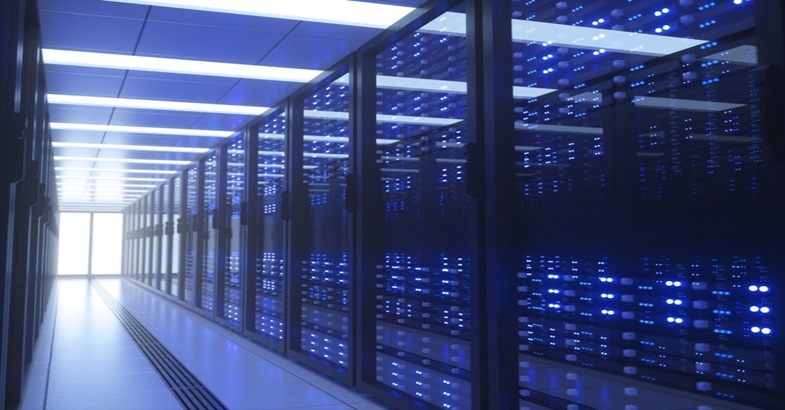
The artificial intelligence revolution runs on approximately 11,000 data centres globally, warehouse-sized facilities housing tens of thousands of specialised processors running continuously. U.S. data centres alone consumed 183 terawatt-hours in 2024 (over 4% of national electricity), equivalent to Pakistan’s entire annual demand. Globally, data centres consumed 415 terawatt-hours, representing 1.5% of global electricity.
By 2030, consumption will more than double to 945 terawatt-hours (nearly 3% of global electricity), equivalent to Japan’s current annual demand. Artificial intelligence related servers grew from 2 terawatt-hours in 2017 to 40 terawatt-hours in 2023, a twenty-fold increase. Artificial intelligence servers will account for almost half of all new data centre electricity consumption by 2030.
India faces unique challenges in this landscape. The country operates approximately 138 data centres as of 2024, with projections estimating this number will exceed 250 by 2027. Maharashtra, Karnataka, and Tamil Nadu host most of these facilities. India’s data centre capacity is expected to reach 2,070 MW by 2027, up from 950 MW in 2023. This rapid expansion occurs as India already grapples with power supply constraints and frequent grid stress.
The Hidden Costs: Beyond Convenience
A single ChatGPT query consumes 2.9 watt-hours, ten times more than a Google search. Generating one artificial intelligence image using Stable Diffusion XL takes as much energy as fully charging a smartphone. Advanced models like Midjourney V6 or DALL-E 3 use up to 2.0 kWh per image, equivalent to charging a phone 70 to 200 times.
The cumulative effect is staggering. Creating 1,000 images produces emissions equivalent to driving 4.1 miles. Training GPT-3 consumed 1,287 megawatt-hours and generated 502 metric tons of CO₂, equivalent to 112 cars running for a year.
However, inference (generating responses to queries) consumes 60% of artificial intelligence energy versus 40% for training. Training happens once; inference happens billions of times daily. GPT-3 emits 8.4 tons of CO₂ annually just from inference.
For India, where artificial intelligence adoption is accelerating rapidly across sectors from agriculture to healthcare, these numbers translate into significant national implications. With over 700 million internet users and growing, India’s per capita artificial intelligence consumption may remain lower than developed nations, but the aggregate impact on an already strained power grid is substantial.
The Water Crisis India Cannot Ignore
U.S. data centres directly consumed 17 billion gallons of water in 2023. Google’s hyperscale data centres average 550,000 gallons daily. A modest 1-megawatt data centre uses 25.5 million litres annually, equivalent to 300,000 people’s daily consumption.
India’s water crisis makes this particularly alarming. The country is already water-stressed, ranked 13th among 17 extremely water-stressed countries globally. Bangalore, India’s tech capital hosting numerous data centres, faces chronic water shortages. In 2024, the city experienced severe water crisis with borewells running dry and residential areas depending on water tankers.
Maharashtra’s Navi Mumbai hosts major data centre facilities while simultaneously dealing with water supply challenges. Chennai, another data center hub, has experienced repeated water crises over the past decade. The Hiranandani data centre campus in Mumbai, one of India’s largest, requires substantial water for cooling in a city where millions face water scarcity during summer months.
Data centres in India often use freshwater for cooling because it is free of impurities that might corrode equipment. This water, once used and chemically treated, becomes unsuitable for human consumption or agriculture. As India plans to triple its data centre capacity by 2027, the water consumption burden will intensify in already water-stressed urban centres.
The Economic Cost for Indian Citizens
Artificial intelligence’s environmental impact translates directly into higher electricity costs. India’s situation presents additional complexity. The country’s average electricity tariff is already among the highest in Asia for commercial establishments. Data centres in India pay approximately INR 7 to INR 10 per unit depending on the state. As data centre demand grows, states like Maharashtra, Karnataka, and Tamil Nadu face pressure to maintain competitive power tariffs to attract investments while managing grid stability.
Cross-subsidisation in India’s electricity sector means residential and agricultural consumers often subsidise industrial and commercial users. The data centre boom could exacerbate this burden, potentially increasing residential electricity bills across major metros. States offering power subsidies to attract data centre investments ultimately pass these costs to citizens through taxes or higher tariffs in other sectors.
Where Does This Energy Come From?
India’s energy mix for data centres raises serious concerns. As of 2024, coal accounts for approximately 50% of India’s electricity generation, natural gas contributes 3%, nuclear power around 3%, and renewables including hydro account for roughly 44%. While India has made remarkable progress in renewable energy capacity, the baseload power for most data centres still relies heavily on coal-fired plants.
The artificial intelligence boom directly contradicts India’s climate commitments. India has pledged to achieve net-zero emissions by 2070 and aims for 50% of its electricity from renewable sources by 2030. However, the surge in data centre electricity demand threatens to slow progress toward these targets.
The Path Forward: India-Specific Solutions
Individual Action Framework: Users should apply an Artificial Intelligence Substitution Hierarchy before each interaction: Can this task be completed manually in under two minutes? Is there a non-artificial intelligence digital tool available? Can a smaller model suffice? Is image generation essential? Can multiple queries be batched together?
Practical changes include using templates and grammar checkers instead of artificial intelligence for email drafting, sourcing stock photography before generating images, using code completion tools instead of full artificial intelligence chats, and installing browser extensions to track artificial intelligence carbon footprint with monthly limits.
Industry Accountability Standards: Every artificial intelligence interface should display real-time environmental dashboards showing energy consumption, water usage, carbon emissions, and energy source breakdown per query. Implementation should allow users to set threshold alerts for monthly artificial intelligence usage.
Indian artificial intelligence service providers should adopt efficiency-first model development. Every large model must produce a lighter version with 90% capability at 10% resource cost. Platforms must use the smallest capable model by default. Companies like Tech Mahindra, Infosys, and Wipro developing artificial intelligence solutions must integrate environmental impact metrics into their development cycles.
Water accountability requires special attention in Indian context. Data centres must treat and recycle 90% of water on-site. New data centres should be prohibited in cities classified as “high” or “extremely high” water stress by NITI Aayog’s Composite Water Management Index. This includes Bangalore, Chennai, Hyderabad, and Delhi NCR without mandatory closed-loop cooling systems.
Regulatory Framework for India
India should implement a Green Artificial Intelligence Certification Program administered by the Ministry of Electronics and Information Technology (MeitY) and Bureau of Energy Efficiency (BEE). A three-tier rating system (Platinum, Gold, Silver) should assess energy efficiency, renewable energy percentage, water consumption metrics, and transparency in reporting. Tax incentives under Section 80-IA should favour Platinum-rated providers.
Strategic data centre zoning should designate “Green Compute Zones” in states with renewable energy surplus. Gujarat (solar), Rajasthan (solar and wind), Tamil Nadu (wind), and Himachal Pradesh (hydro) should be considered on priority for new data centre investments. Karnataka and Maharashtra should face stricter environmental compliance requirements given their water stress.
The proposed Digital Personal Data Protection Act should include provisions mandating artificial intelligence providers to disclose environmental impact data to users. Services exceeding efficiency thresholds should face carbon fees, with revenue funding renewable energy infrastructure through the National Clean Energy Fund.
Infrastructure Innovation
The Phase 1 (2025 to 2027) should optimise existing infrastructure by raising server room temperatures from 18°C to 27°C, implementing hot aisle containment, and using free air-cooling during winter months in northern India.
The Phase 2 (2027 to 2030) should deploy direct-to-chip liquid cooling, two-phase immersion cooling, and waste heat recovery. Captured heat could warm water for nearby residential complexes or industrial processes, particularly relevant in northern Indian winters.
The Phase 3 (2030 onwards) should implement seawater cooling for coastal data centres in Mumbai, Chennai, and Visakhapatnam, eliminating freshwater consumption. Smart load management should time-shift artificial intelligence training to afternoon solar peaks when states like Gujarat and Rajasthan generate surplus renewable power.
Accountability Mechanisms
The Central Electricity Authority should mandate monthly reporting of energy consumption and carbon emissions from all data centres above 1 MW capacity. The Central Pollution Control Board should track and publish water consumption data with local water stress context. Independent auditing by institutions like TERI (The Energy and Resources Institute) or IIT research centres should verify environmental claims annually. Penalties for misreporting should reach up to 2% of annual revenue, aligned with India’s regulatory framework.
Conclusion
Artificial intelligence data centres will contribute 1 to 1.4% of global CO₂ emissions by 2030. For India, balancing artificial intelligence ambitions with environmental sustainability is not optional, it is imperative. The country faces a critical juncture as it aims to become a global artificial intelligence hub while managing severe water stress, power supply constraints, and climate commitments.
These are implementable solutions with proven effectiveness. The technology exists. What is missing is political will, regulatory frameworks, and collective demand for change. India pioneering sustainable artificial intelligence adoption could set a precedent for emerging economies globally. The cloud has weight. The time to measure, disclose, and systematically reduce it while preserving artificial intelligence’s transformative potential is now.
* Contributors to this blog also include Harshitha Mankal & Rishik Reddy, current students of the Post Graduate Programme at the Indian School of Business (ISB).

Author’s Bio: Kavya Mankal is a BBA student at Mahindra University with a strong focus on data analytics, digital marketing, and strategic management, complemented by her ongoing pursuit of CIMA and a strong interest in sustainability. Having contributed to AI-driven pricing models, cybersecurity research, and real-time client engagements, she is passionate about using data and technology to solve complex business problems in more sustainable and responsible ways.